
Reversi before Othello
Games in which you flip discs by trapping them existed before modern Othello. John W. Mollett's "The Game of Annexation" appeared in 1870. In the 1880s, Reversi by Lewis Waterman and Mollett developed in England.
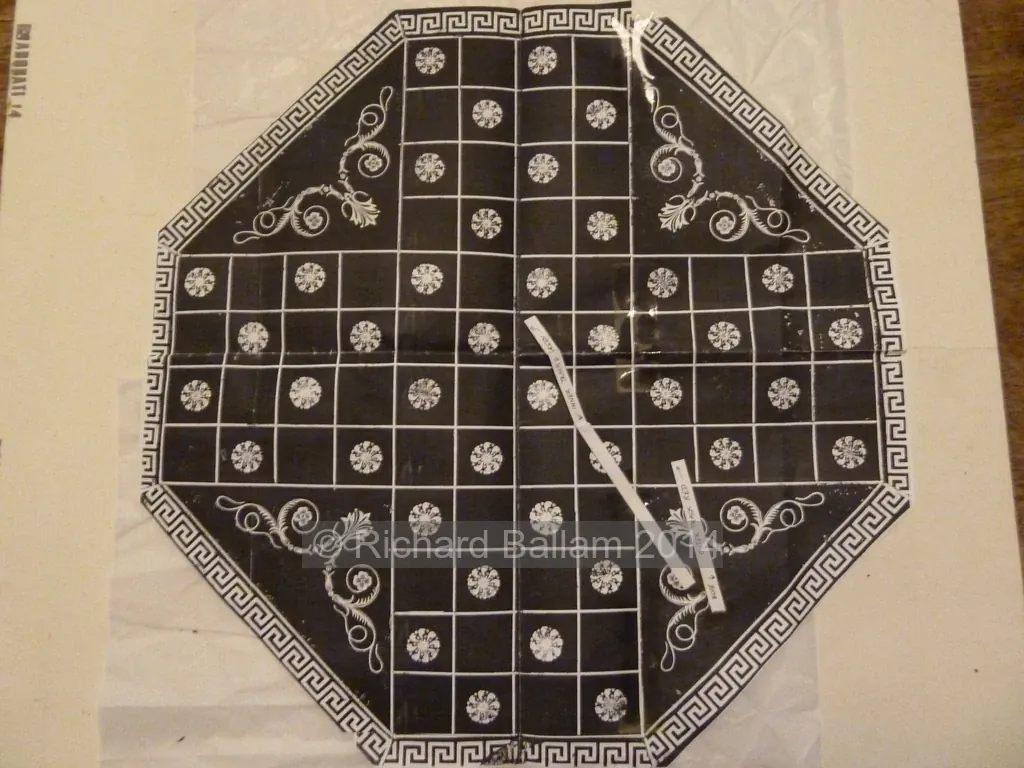
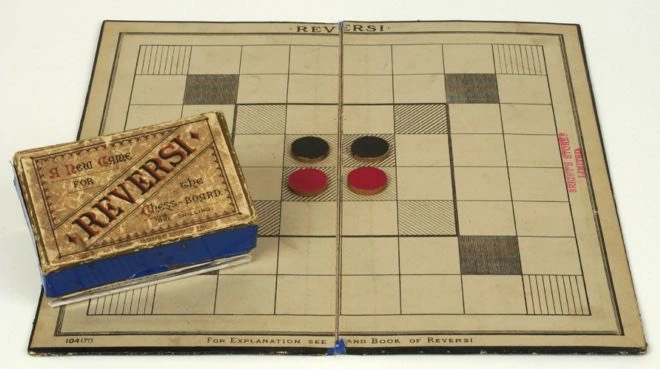
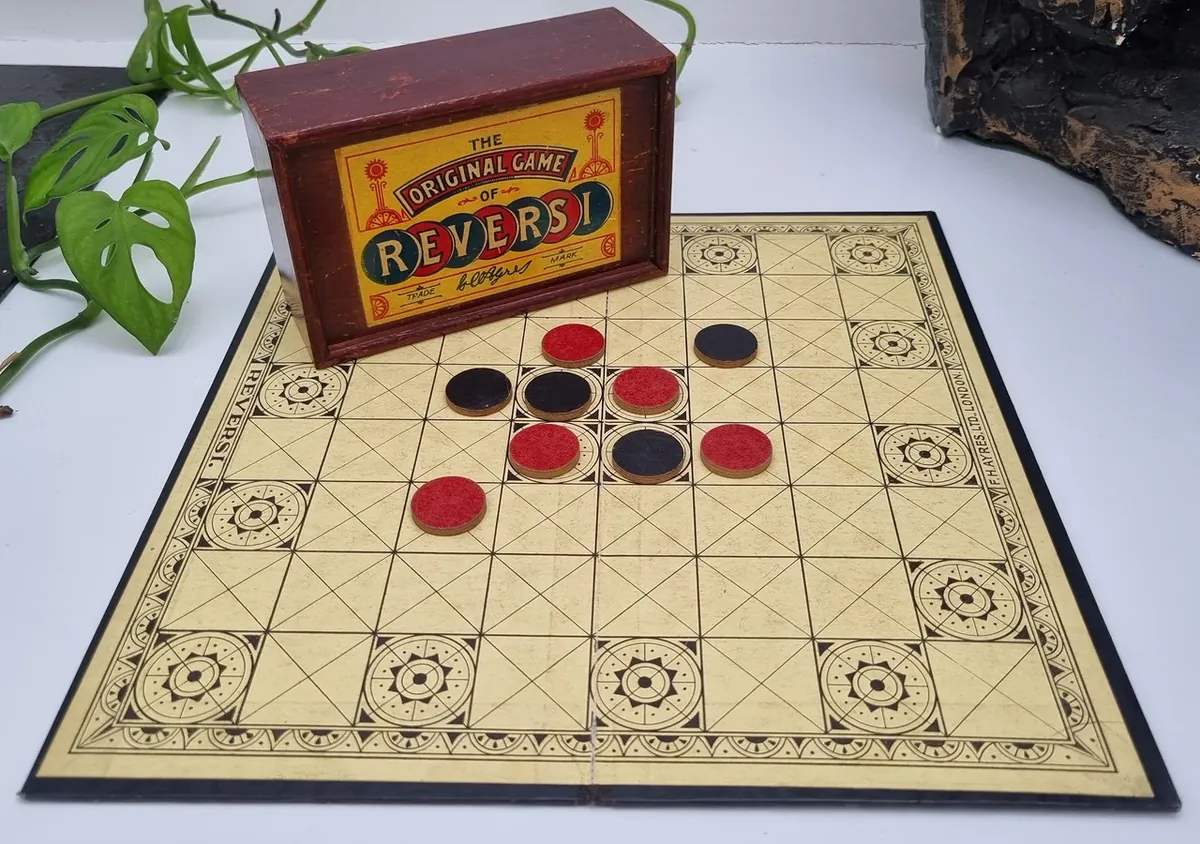
Early Reversi looked like today's Othello, but it started on an empty board, and the first four moves could be placed freely on the four center squares. Each player also had 32 discs, and a player who used them all could no longer move. Reversi became very popular in England in the late 19th century and spread to many European countries. But its popularity did not last; it gradually declined from the early 20th century, and by the time Othello was launched in 1973 it had been almost forgotten by the public. The rules of the time can be read in The Handbook of Reversi (Mollett's Reversi, 1889) and Reversi and Go Bang (Waterman's Reversi, 1890).
Goro Hasegawa and modern Othello
In early 20th-century Japan, Reversi was known as “Genpei Go (源平碁)”. According to Goro Hasegawa’s (長谷川五郎) recollections, in the 1960s he made playing discs from milk bottle caps and refined the equipment and rules while introducing the game to his family and colleagues. When Othello was launched in 1973, Goro explained that he had improved the game based on the existing Genpei Go.
1973: launch and spread
It was officially released by the Japanese toy manufacturer Tsukuda on April 29, 1973, under the name “Othello”, and spread from Japan to the rest of the world. Othello standardized its look with a green board and black and white discs, and fixed the starting position with discs placed diagonally on the four center squares. Each player starts with 32 discs, but unlike in Reversi, a player who runs out can take discs from the opponent and keep playing.
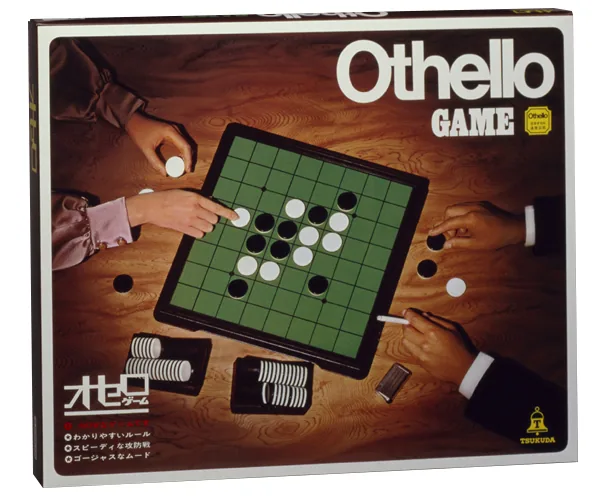
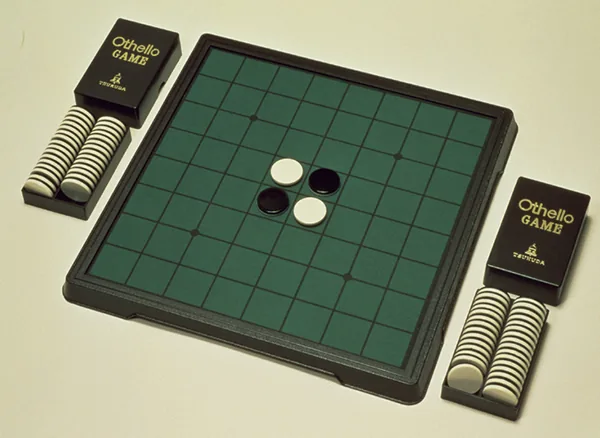
The name comes from "Othello"
The name was given by Goro's father, the English literature scholar Shiro Hasegawa (長谷川四郎). It comes from Shakespeare's tragedy "Othello", likening Othello and Desdemona in the play to the black and white discs.
Spreading worldwide
The first World Othello Championship (WOC) was held in Tokyo, Japan, in 1977, and the first world champion was Hiroshi Inoue of Japan. Tournaments and associations then spread to many countries. You can find the records of past championships in Othelloclub's WOC history.
While Reversi enjoyed great popularity in the 19th century before gradually declining, Othello spread beyond Japan to many countries and became an international board game. With national associations and tournaments taking shape and World Championships continuing, it remains both a game enjoyed at home and a competition where players from around the world test their skills.